
Last updated
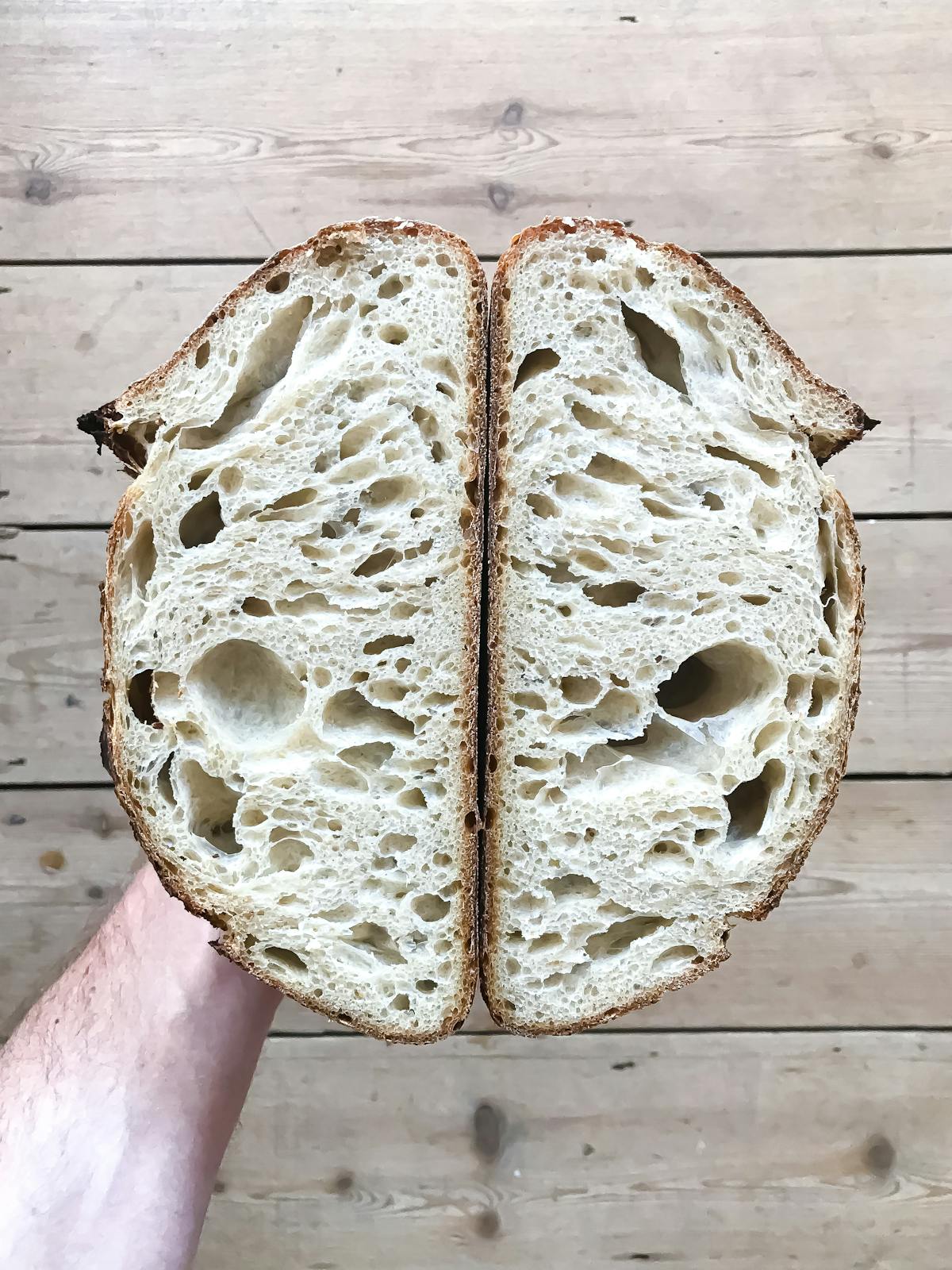
7 Sourdough Mistakes That Ruin Your Bread (And Fixes)
Every sourdough baker makes mistakes—it's how we learn. Use our sourdough calculator to get hydration and ratios right. For more solutions, see our troubleshooting guide.
Mistake 1: Ignoring Hydration in Calculations
Problem: You forget to include your starter's flour and water. Fix: Always include starter. Or use our sourdough hydration calculator. Read our hydration calculation guide.
Mistake 2: Using Volume Instead of Weight
Problem: "2 cups flour" can vary by 30%. Fix: Use a scale. Grams only.
Mistake 3: Overproofing
Problem: Dough rises too long. Collapses, bakes flat, overly sour. Fix: Watch for ~50% volume increase. Poke test: indent should spring back slowly.
Mistake 4: Underproofing
Problem: Dough hasn't risen enough. Dense crumb. Fix: Let it rise. Look for 50% increase, domed top, bubbles.
Mistake 5: Adding Flour During Shaping
Problem: You add flour when dough sticks—lowers hydration. Fix: Wet your hands. Use a bench scraper. Don't add flour. See our hydration guide.
Mistake 6: Using Weak or Hungry Starter
Problem: Starter hasn't doubled. Dough doesn't rise. Fix: Feed 1:2:2, wait for double. Use at peak. See our feeding schedule guide.
Mistake 7: Wrong Levain Amount
Problem: Too much = overproofs quickly. Too little = unpredictable. Fix: Use 18-22%. Our calculator defaults to 20%. See starter ratio guide.
Mistake 8: Rushing the Process
Problem: Sourdough needs time. Fix: Plan ahead. Autolyse 30-60 min. Bulk ferment until ready. Trust the process.
Frequently Asked Questions
Underproofing, low hydration, or weak starter. Aim for 50% rise, 70%+ hydration, starter that doubles in 4-6 hours.
Overproofing or too much levain. Use 15-20%, watch fermentation, don't over-rise.
Overproofing, underproofing, or weak gluten. Watch fermentation, develop gluten with folds.
High hydration or adding flour. Use wet hands, try 70-75% if new.
Cold, wrong flour, or underfeeding. Keep 24-26°C, use unbleached flour, feed 1:1:1 daily.
Most home-baker mistakes show up at the same handful of decision points. Below: the questions readers email us most often, with the fixes that work in one bake.
Common-mistakes FAQ
The dough was overproofed before going into the oven, or the oven was not hot enough. Use the poke test (slow spring back) to confirm proof, and verify the Dutch oven hits 250 °C / 480 °F before loading.
Either the loaf came out under temperature (96 °C / 205 °F internal is the minimum) or you cut while still hot. Always cool fully — at least 90 minutes — before slicing.
Too much steam time, oven too dry after the lid comes off, or bake too long. Drop the uncovered bake by 5 minutes and pull when the loaf reaches 99 °C / 210 °F internal.
Either the bulk was too short, the cold proof was skipped, or the salt is under-dosed. Aim for 2 % salt, a 50–75 % bulk rise, and at least 12 hours of cold proof for full flavor development.
Related guides
Disclaimer: Baking results vary based on flour type, ambient temperature, starter health, and technique. Use this guide and our sourdough hydration calculator as a starting point, then adjust to your conditions.